
Advertisements
Did you know that nearly 80% of gym-goers skip foam rolling entirely? I used to be one of them! Honestly, I thought those weird cylindrical torture devices were just taking up space in the corner of my gym. Boy, was I wrong about that.
After dealing with tight IT bands that felt like steel cables for months, I finally caved and tried foam rolling. The first session was brutal—I mean, seriously painful. But within two weeks, my mobility improved so much that I could actually touch my toes again without groaning like my grandfather.
What Exactly Is Foam Rolling Anyway?
Foam rolling is basically self-myofascial release, which sounds super fancy but really just means you’re giving yourself a deep tissue massage. The foam roller applies pressure to your muscles and fascia (that’s the connective tissue wrapping around everything), helping to break up knots and adhesions.
Think of your fascia like a spider web that covers all your muscles. When you don’t move enough or you exercise too hard, that web gets tangled up. Foam rolling helps smooth it back out.
My Biggest Foam Rolling Mistakes (So You Don’t Make Them)
Here’s where I really messed up at first. I went way too fast! I was rolling like I was trying to win some kind of speed contest, spending maybe 5 seconds on each muscle group. That does basically nothing, folks.
I also made the classic newbie error of rolling directly on my lower back. Ouch! That’s actually a big no-no because you can compress your spine. Instead, you should focus on your glutes and the muscles around your lower back—they’re usually the real culprits anyway.
And don’t even get me started on how I used to roll over joints. Your knees, elbows, and other bony areas shouldn’t be getting rolled directly. Stick to the meaty muscle parts!
The Right Way to Roll (Trust Me on This)
After lots of trial and error—mostly error, if I’m being honest—I figured out the proper technique. When you find a tender spot, you need to pause there for 20 to 30 seconds. I know it hurts, but that’s where the magic happens.
Roll slowly, about one inch per second. This isn’t a race, even though it feels like your muscle is trying to escape from under that roller!
Here’s my golden rule: the discomfort should be about a 6 or 7 out of 10. If you’re hitting a 9 or 10 and tears are forming, back off a bit. That’s too intense and you might actually cause more harm than good.
My Go-To Muscle Groups (The Ones That Actually Matter)
Your IT bands need attention, especially if you’re a runner like me. Position yourself on your side with the foam roller under your outer thigh, then roll from just below your hip to just above your knee. It’s gonna hurt the first few times—I literally yelled out loud in my living room the first time I tried this.
Quads are another biggie. Face down with the roller under your thighs, and roll from your hip to just above your knee. Sometimes I’ll do this while watching TV because it takes my mind off the discomfort.
The upper back is actually my favorite area to roll now. It feels so good after sitting at a desk all day! Lie on your back with the roller under your shoulder blades, and gently roll up and down. This one’s actually pretty relaxing once you get used to it.
Picking Your Weapon of Choice
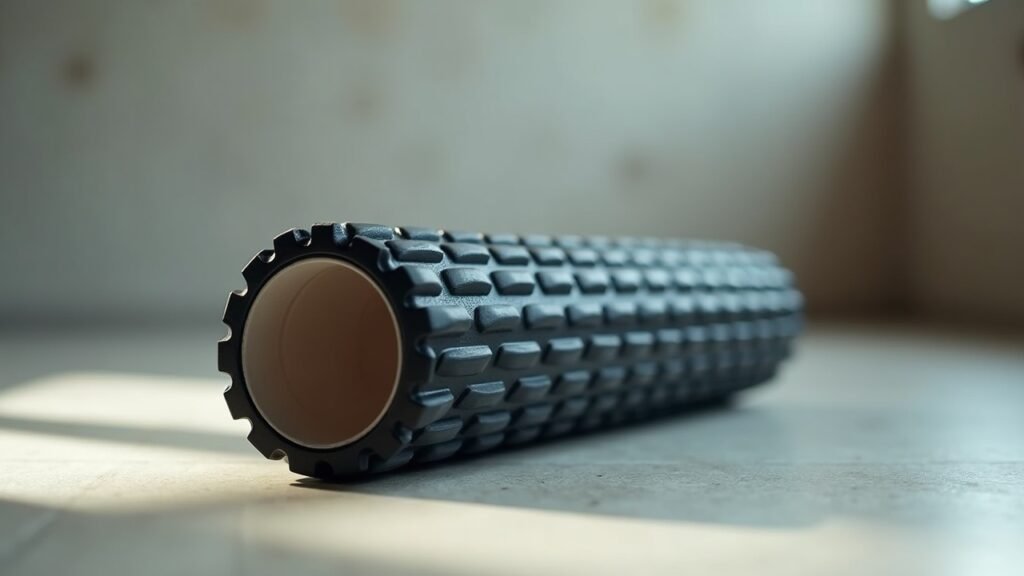
Not all foam rollers are created equal, my friends. I started with a basic smooth roller from Target, which was fine for beginners. But as my muscles got used to it, I needed something with more oomph.
Textured rollers with bumps and ridges dig deeper into those stubborn knots. They’re not for the faint of heart though! I’d say stick with smooth for your first month, then graduate to the gnarly ones if you need more intensity.
When Should You Actually Do This?
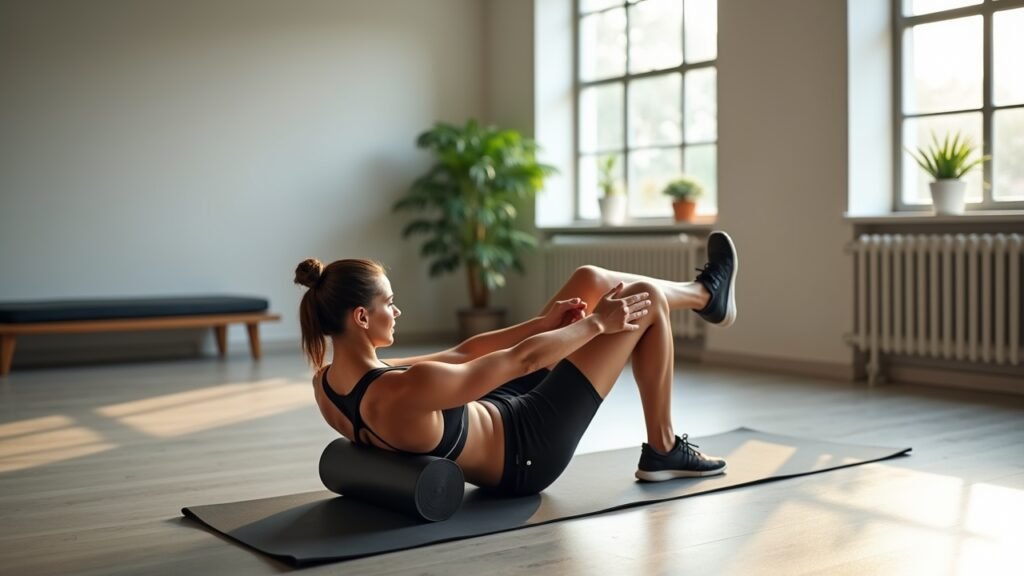
I foam roll pretty much every day now, usually right before bed. It’s become part of my wind-down routine, kinda like brushing my teeth. Some people swear by rolling before workouts as a warm-up, which definitely helps with muscle activation and blood flow.
Post-workout rolling is great too for reducing soreness the next day. I wish someone had told me this when I first started lifting weights—would’ve saved me from walking like a robot for days after leg day!
Rolling Into Your New Routine
Look, foam rolling isn’t some miracle cure-all, but it’s been a game-changer for my recovery and flexibility. Start slow, be patient with yourself, and remember that consistency beats intensity every single time.
Your body will thank you for taking those extra 10 minutes to show your muscles some love. And hey, if you fall asleep while foam rolling your calves (guilty!), that’s probably a sign you needed both the rolling and the nap.
Want to learn more ways to improve your fitness game and treat your body right? Check out more practical guides and real-talk fitness advice over at Aerobic Atlas—we’re all about keeping it real and actually useful around here!