Advertisements
Did you know that roughly 95% of people who start a new workout routine quit within the first three months? I learned this the hard way back when I decided to become a “gym person” overnight. Spoiler alert: my muscles had other plans! The soreness was so bad I couldn’t even sit down on the toilet without groaning like an old man. That’s when I realized that learning how to reduce muscle soreness wasn’t just nice to have—it was absolutely essential if I wanted to stick with fitness long-term.
The Time I Couldn’t Lift My Arms Above My Head

Let me paint you a picture. It’s 2019, and I’ve just finished what I thought was a “moderate” upper body workout. The next morning, I literally couldn’t wash my hair in the shower. My arms were stuck in this weird T-Rex position, and my deltoids felt like they’d been attacked by a thousand tiny hammers.
That’s delayed onset muscle soreness, or DOMS for short, and it typically peaks about 24-72 hours after exercise. What I didn’t know then was that this whole nightmare could’ve been prevented—or at least minimized—with some simple recovery strategies.
Hydration Isn’t Just Some Fitness Guru BS
Okay, so everyone tells you to drink water. But here’s what nobody explains: your muscles are literally about 75% water! When you work out, you’re creating tiny tears in the muscle fibers (which sounds way scarier than it actually is), and your body needs adequate hydration to repair that damage.
I used to think chugging a bottle of water after my workout was enough. Wrong! You need to be hydrated before, during, and after exercise. Now I keep a water bottle with me constantly—like it’s my emotional support animal or something. The Mayo Clinic recommends about 15.5 cups of fluid daily for men and 11.5 cups for women, though your needs might vary based on activity level.
The Magic of Active Recovery
Here’s where I messed up royally. After that brutal workout, I spent two days on my couch binge-watching Netflix, thinking my body needed complete rest. Turns out, that was probably the worst thing I could’ve done!
Active recovery—like going for a gentle walk, doing some yoga, or even just stretching—actually helps reduce muscle soreness way better than being a complete couch potato. Light movement increases blood flow to your sore muscles, which brings nutrients and oxygen that speed up recovery. Who knew?
These days, I do a 20-minute walk on my “rest days,” and honestly, it’s made such a difference. My recovery time got cut in half.
Protein Timing Actually Matters
I used to roll my eyes at people who were obsessed with their post-workout protein shakes. But then I learned that consuming protein within 30-60 minutes after exercise can significantly help with muscle recovery and reduce soreness. The research on protein supplementation shows it’s not just bro-science—it’s legit helpful.
You don’t need anything fancy, though. A simple chicken breast, some Greek yogurt, or yeah, even a protein shake will do the trick. I usually go for chocolate milk because, well, it tastes good and has a decent protein-to-carb ratio.
Sleep Is Where the Magic Happens
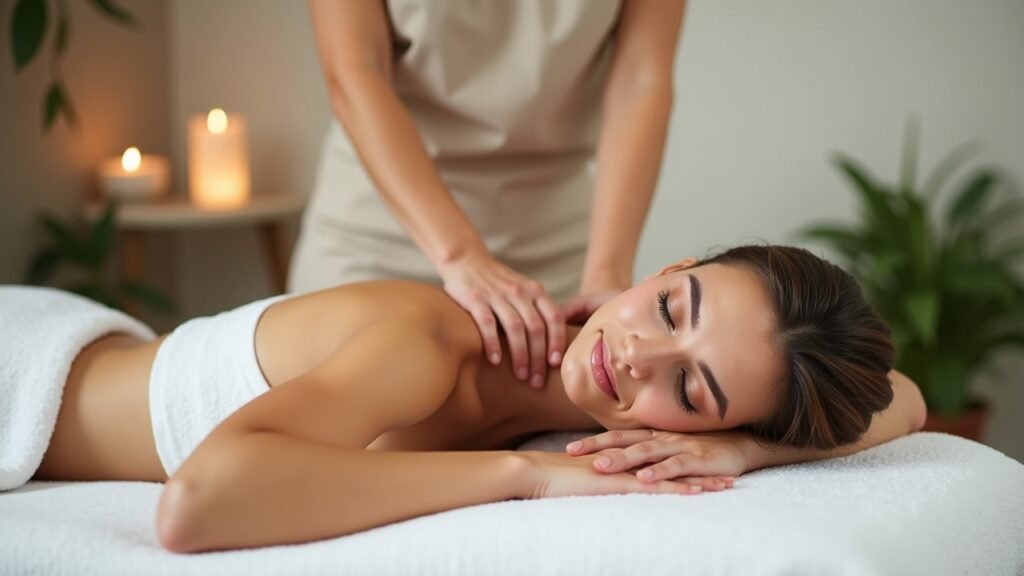
This one hit me hard during my teaching career. I’d work out, eat right, do everything “correctly,” but still feel sore forever because I was only sleeping like 5 hours a night. Your body does most of its muscle repair during deep sleep, so skimping on shut-eye is basically sabotaging your recovery.
Aim for 7-9 hours nightly. I know, easier said than done. But trust me, the difference is massive.
Hot and Cold Therapy (My Personal Game-Changer)
Contrast therapy—alternating between hot and cold treatments—sounds like medieval torture but actually works wonders. After a tough leg day, I’ll take a warm bath for about 15 minutes, then finish with a cold shower for 2-3 minutes. The temperature changes help flush out metabolic waste products and reduce inflammation.
If you’re not into the hot-cold routine, even just a simple ice pack on particularly sore areas can help. Or a heating pad. Both have been shown to provide relief, though they work through different mechanisms.
Your Muscles Need You
Look, muscle soreness is gonna happen, especially when you’re trying something new or pushing yourself harder. But it doesn’t have to be this massive roadblock that derails your entire fitness journey like it almost did for me. Stay hydrated, move gently on recovery days, fuel your body properly, and for the love of all things holy, get some decent sleep.
Remember that everyone’s body responds differently to these strategies. What works amazingly for me might need tweaking for you, and that’s totally normal. Listen to your body—it’s usually trying to tell you something important.
Want more practical tips on staying active and healthy without the unnecessary suffering? Check out more articles at Aerobic Atlas where we break down fitness topics in ways that actually make sense for real people!