
Advertisements
Did you know that 73% of people who buy gym memberships stop going within the first six months? I was totally one of those people! That’s when I decided to take the plunge and create my own home gym setup, and honestly, it’s been one of the best decisions I’ve made for my fitness journey.
Look, I get it. The idea of turning your spare bedroom or garage into a workout space sounds kinda overwhelming at first. But trust me on this one – having a home gym has saved me countless hours of driving, eliminated the awkward wait times for equipment, and let me workout in my rattiest t-shirt without judgment.
The Epic Fail That Started It All
So here’s where I totally messed up initially. I went out and dropped nearly $2,000 on fancy equipment before even measuring my space! Yeah, rookie move. I ended up with this massive power rack that barely fit in my garage, and I couldn’t even open the door fully. Had to return it and start from scratch, which was super embarrassing but taught me a valuable lesson about planning.
Start With Your Space (Seriously, Measure It)
First things first – you gotta assess your available space. I’m talking about actually measuring the square footage, ceiling height, and checking if there’s proper ventilation. My garage gym gets hot as heck in the summer because I didn’t think about airflow initially.
For most people, you’ll need at minimum about 100 square feet for a basic setup. That’s roughly a 10×10 area. But here’s the thing – you also need to account for movement space around your equipment, which I definitely didn’t do at first.
The Essential Equipment (My Bare-Bones List)
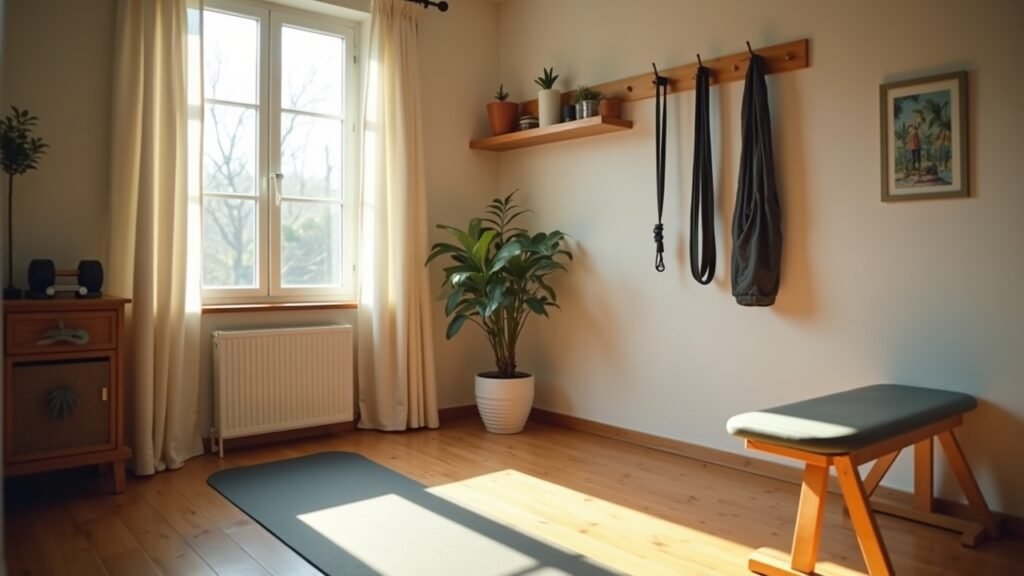
After years of trial and error, here’s what I consider the core essentials for any solid home gym setup:
- Adjustable dumbbells or a good set of free weights
- A quality bench (preferably adjustable)
- Resistance bands for warm-ups and accessory work
- A yoga mat or some proper gym flooring
- Pull-up bar or power rack if you got the space
Honestly, you can build serious strength with just these basics. I started with just dumbbells and a simple bench, and it was more than enough for the first six months.
Flooring: Don’t Skip This Part
This is where I had another facepalm moment. I started doing deadlifts straight on my garage’s concrete floor, and the noise was ridiculous! Plus, I damaged the concrete and nearly dropped a weight on my foot because it bounced weird.
Rubber flooring or interlocking foam mats are absolute game-changers. They protect your floors, reduce noise (your downstairs neighbors or family will thank you), and provide cushioning for bodyweight exercises. I went with 3/4 inch rubber tiles and couldn’t be happier with them.
Advertisements
Budget-Friendly Tips From Someone Who Learned the Hard Way
Listen, you don’t need to break the bank. I spent way too much money on brand-name stuff when I was starting out, thinking it would somehow make me more motivated to workout.
Check Facebook Marketplace, Craigslist, or garage sales for used equipment. People are constantly selling barely-used weights and benches because, well, they gave up on their fitness goals. One person’s abandoned New Year’s resolution can become your gain – literally!
Also, consider building some DIY equipment. I made sandbags from old duffel bags and play sand, which cost me like $15 total. They’re perfect for functional training and they work just as good as the fancy Bulgarian bags.
Creating the Right Atmosphere
Here’s something nobody really talks about – your home gym needs to feel motivating. I hung up some inspirational posters (yeah, kinda cheesy, but it works for me), installed a decent speaker system for my workout playlists, and made sure there’s good lighting.
Natural light is best if you can swing it. My garage has a window, and working out in the morning sunlight just hits different than in a dark basement. If you’re stuck with artificial lighting, go for bright LED bulbs that mimic daylight – the improvement in mood is real.
Your Fitness Home Awaits
Building a home gym setup isn’t rocket science, but it does require some thought and planning. Start small, focus on the essentials, and gradually build up your equipment collection as your needs and budget allow. Remember, the best home gym is the one you’ll actually use consistently!
Safety-wise, always make sure equipment is properly assembled and anchored, especially power racks and wall-mounted pull-up bars. And please, don’t lift heavy without safety bars or a spotter – I learned that lesson with a close call during bench press that still makes me cringe.
Ready to dive deeper into your fitness journey? Head over to Aerobic Atlas for more practical tips, workout routines, and honest equipment reviews from someone who’s made all the mistakes so you don’t have to!