
Advertisements
So here’s the thing – I used to think the Mediterranean diet was just some fancy eating plan for people who had time to cook elaborate meals every single night. Boy, was I wrong! Last year, I stumbled across a study showing that people following this eating pattern had a 25% lower risk of heart disease, and that got my attention real quick. After my doctor mentioned my cholesterol was creeping up, I figured it was time to stop messing around and actually give this whole Mediterranean thing a serious shot.
The Mediterranean diet isn’t really a “diet” in the traditional sense – it’s more like eating the way people in Greece, Italy, and Spain have been eating for centuries. And let me tell you, these folks know what’s up when it comes to food!
What I Actually Eat on the Mediterranean Diet
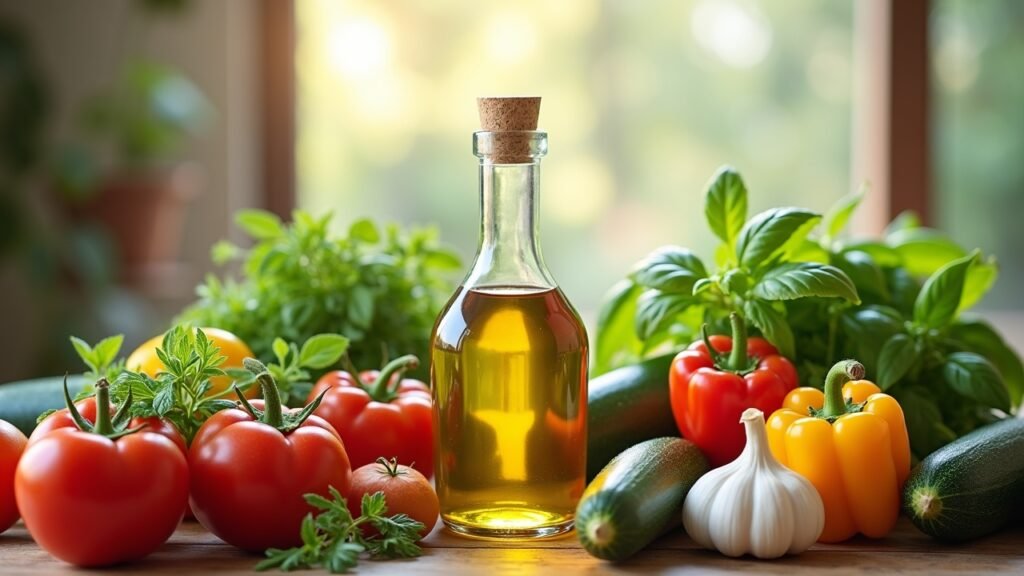
When I first started, I was totally overwhelmed trying to figure out what foods were “allowed.” Turns out, it’s way simpler than I thought. The foundation of Mediterranean eating is basically whole foods – you know, the stuff your great-grandmother would recognize as actual food.
Here’s what fills up my kitchen these days. Olive oil is seriously everywhere in my cooking now – I go through like a bottle every two weeks, which my wallet isn’t always thrilled about, but the health benefits are legit worth it. I load up on vegetables at every meal, and I’m talking colorful stuff like tomatoes, spinach, bell peppers, and zucchini.
Whole grains became my best friend too. I switched from white rice to quinoa and brown rice, and honestly? After a week, I didn’t even miss the white stuff. Fish appears on my plate at least twice a week now – usually salmon or sardines because they’re packed with those omega-3 fatty acids everyone talks about.
The Foods That Surprised Me Most
Nuts and legumes are huge in this way of eating. I keep almonds in my desk drawer at work, and chickpeas have become my go-to for quick dinners. Beans, lentils, all that good stuff – they’re cheap, filling, and apparently amazing for your gut health.
Fresh fruits are my dessert now. I know, I know – it sounds boring compared to ice cream, but a ripe peach in summer or some fresh berries with a drizzle of honey? That’s actually pretty damn satisfying once you get used to it.
What I Had to Cut Back On (The Hard Part)
Not gonna lie, this part sucked at first. Red meat went from a few times a week to maybe once or twice a month. I had a moment where I seriously mourned my weekly burger nights, but I found that chicken and turkey scratched that same itch when seasoned right.
Processed foods were the biggest challenge for me personally. Those convenient frozen meals? Yeah, they had to go. Sugary snacks got replaced with fruit and nuts, which took some serious mental adjustment, I’m not gonna pretend it was easy.
Advertisements
The weird thing is, after about three weeks, my taste buds actually changed. Foods I used to love started tasting weirdly artificial or too salty.
My Typical Day of Mediterranean Eating
Breakfast is usually Greek yogurt with berries, walnuts, and a drizzle of honey. Sometimes I’ll do whole grain toast with avocado and a poached egg if I’m feeling fancy or have extra time before work.
Lunch might be a big salad with chickpeas, cucumber, tomatoes, olives, and feta cheese, all dressed in olive oil and lemon juice. Or maybe some leftover lentil soup that I meal-prepped on Sunday because let’s be real – weekday cooking is hard enough without starting from scratch every single time.
Dinner’s where I get a bit more creative. Grilled fish with roasted vegetables is my jam. Or sometimes I’ll make a simple pasta with lots of veggies, garlic, and olive oil. The key is keeping it simple – this isn’t about becoming a gourmet chef overnight.
The Lifestyle Part Nobody Talks About
Here’s something that caught me off guard: the Mediterranean diet is also about how you eat, not just what you eat. Taking time to actually sit down for meals instead of scarfing food down while standing at the counter made a bigger difference than I expected. Sharing meals with family or friends when possible turned dinner into something I actually looked forward to rather than just another thing to check off my to-do list.
And moderate wine consumption is part of the tradition – usually red wine with meals. I’m talking like one glass, not the whole bottle (learned that lesson the hard way).
Ready to Start Your Mediterranean Journey?

Look, I’m not gonna pretend this is some magic cure-all or that it’s always easy to stick with. Some days I still crave a greasy burger or want to just order pizza. And that’s totally okay! The Mediterranean approach is flexible enough that you can customize it to fit your actual life, not some Instagram-perfect fantasy version.
The most important thing I learned is to start small – maybe just add an extra vegetable to dinner or swap your cooking oil for olive oil. You don’t have to overhaul everything overnight. Be patient with yourself as you figure out what works for your schedule, budget, and taste preferences.
If you’re curious about more ways to improve your health and fitness journey, swing by Aerobic Atlas where we’ve got tons of other articles about living healthier without making yourself miserable in the process. Trust me, there’s a whole community of us figuring this stuff out together!