Advertisements
I’ll never forget my first CrossFit class back in 2019. The coach started throwing around terms like “AMRAP” and “EMOM,” and I just stood there nodding like I understood everything while secretly panicking inside! Honestly, I felt like I’d walked into a foreign language class without any preparation whatsoever.
Learning CrossFit terminology isn’t just about fitting in with the gym crowd – it’s actually super important for your safety and progress. When you understand what your coach means by a “metcon” or a “chipper,” you can properly prepare mentally and physically for what’s coming your way.
The Essential WOD Vocabulary You Need to Know
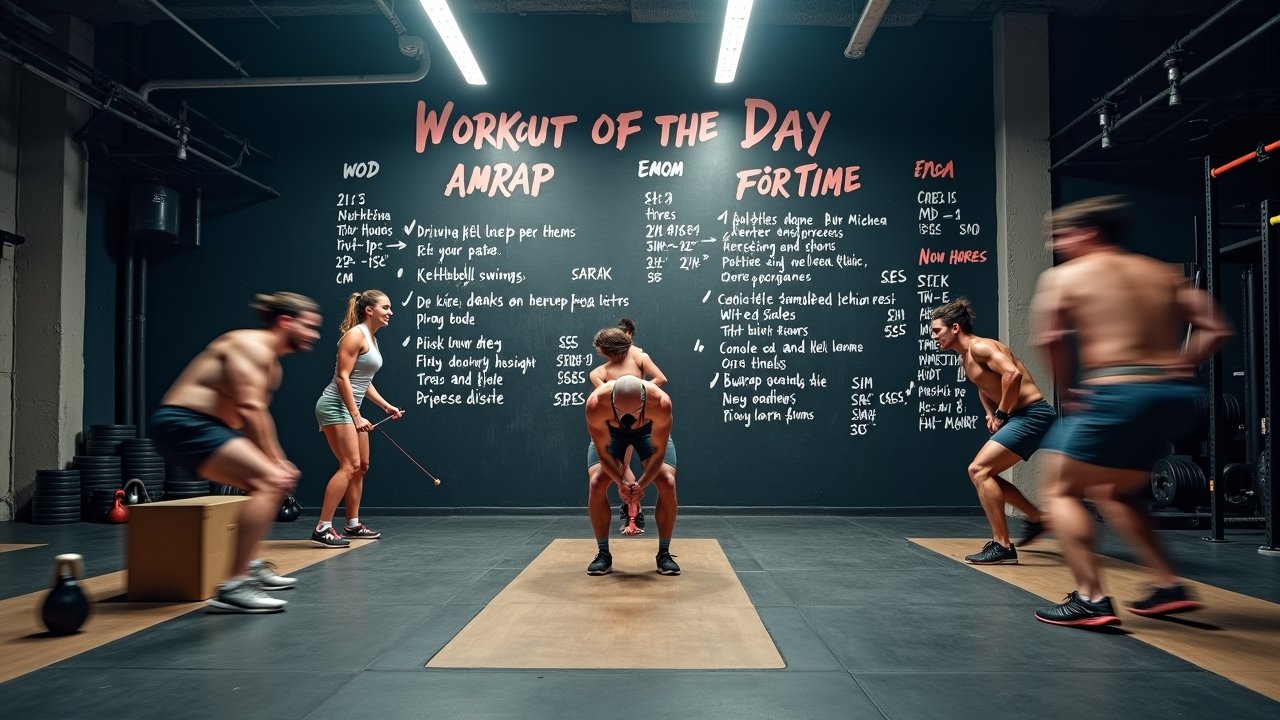
Let me break down the most common CrossFit movements and terms you’ll hear during your workout of the day. WOD itself stands for “Workout of the Day,” and it’s basically the entire training session your box (that’s CrossFit speak for gym) has programmed for everyone.
AMRAP means “As Many Rounds (or Reps) As Possible” within a set time limit. I used to hate these because they pushed me way harder than I wanted to go! But honestly, they’re amazing for building mental toughness.
EMOM stands for “Every Minute On the Minute.” You perform a specific number of reps at the start of each minute, then rest for whatever time remains. The first time I tried an EMOM with burpees, I completely underestimated how gassed I’d be by minute five.
Benchmark Workouts That’ll Test Your Limits
CrossFit has these crazy benchmark workouts with women’s names called “The Girls.” Fran, Cindy, Annie – they sound friendly, but they’re absolutely brutal. These workouts help you track your progress over time, which is pretty cool actually.
Then there’s “The Heroes” – workouts named after fallen military members, police officers, and firefighters. These are typically longer and designed to honor their sacrifice. Murph is probably the most famous one, and let me tell you, it’s no joke.
Movement Terminology That Confused the Heck Outta Me
When someone first told me to do a “thruster,” I had zero clue what they meant. Turns out it’s a front squat combined with a push press – basically two movements smooshed into one exercise that’ll leave your legs and shoulders screaming.
Here’s a quick list of movements you’ll encounter regularly:
Advertisements
- Box jumps – jumping onto and off a sturdy platform
- Wall balls – throwing a medicine ball at a target on the wall
- Double unders – jump rope passes under your feet twice per jump
- Kipping pull-ups – using momentum to complete pull-ups
- Deadlifts – lifting a barbell from the ground to hip level
I spent three months trying to master double unders before I could string together more than five in a row. My shins were constantly bruised from whipping myself with the rope, but eventually something just clicked!
Scaling and Rx’d – Understanding Your Options
“Rx’d” (pronounced “as prescribed”) means doing the workout exactly as written with the prescribed weights and movements. When I started out, I thought I had to do everything Rx’d to be a “real” CrossFitter – that was dumb thinking on my part.
Scaling is modifying the workout to match your current fitness level, and there’s absolutely zero shame in it. Actually, scaling properly helps prevent injuries and ensures you’re getting the intended stimulus from the workout. I wish someone had told me this earlier because I definitely pushed too hard too soon and paid for it with a tweaked lower back.
Rep Schemes and Time Domains Explained
A “chipper” is a longer workout where you “chip away” at a list of exercises, doing each movement once before moving to the next. These workouts can take anywhere from 20 to 40 minutes, and they’re mentally challenging because you can’t see the end coming.
For time (FT) workouts mean you complete all the work as fast as possible. There’s usually a time cap though, so you’re not out there grinding away for hours. Tabata refers to intervals of 20 seconds work followed by 10 seconds rest, repeated eight times – simple concept, brutal execution.
Equipment Terms Worth Knowing
The “rig” is that big metal structure with pull-up bars you see in every CrossFit gym. A “bumper plate” is a rubber-coated weight plate that can be dropped safely. I’ve definitely heard some high-quality equipment terminology thrown around at the box.
PVC pipes are used for practicing movements with proper form before adding weight. Trust me, even after years of CrossFit, I still grab a PVC pipe to warm up my overhead squat mechanics – there’s no ego in proper preparation!
Your Journey With CrossFit Lingo Starts Here
Learning CrossFit terminology might feel overwhelming at first, but you’ll pick it up faster than you think. Everyone at your box was once a confused newbie too, so don’t be afraid to ask questions when something doesn’t make sense.
Remember that safety comes first – if you don’t understand a movement or workout format, speak up before you start. Your coach would way rather explain something twice than have you get injured because you were too embarrassed to ask.
Looking for more fitness insights and workout tips? Check out other helpful articles at Aerobic Atlas where we break down everything from training techniques to nutrition advice in the same straightforward, no-BS style you just read here!